Artificial intelligence is no longer a distant, futuristic idea for Africa; it’s already showing up in classrooms, hospitals, banks, and supermarkets across the continent. The real question isn’t whether Africa can adopt AI, but how: how do we build the skills, the confidence, and the local relevance needed for AI to actually take root here, rather than remaining something imported and imposed from elsewhere?
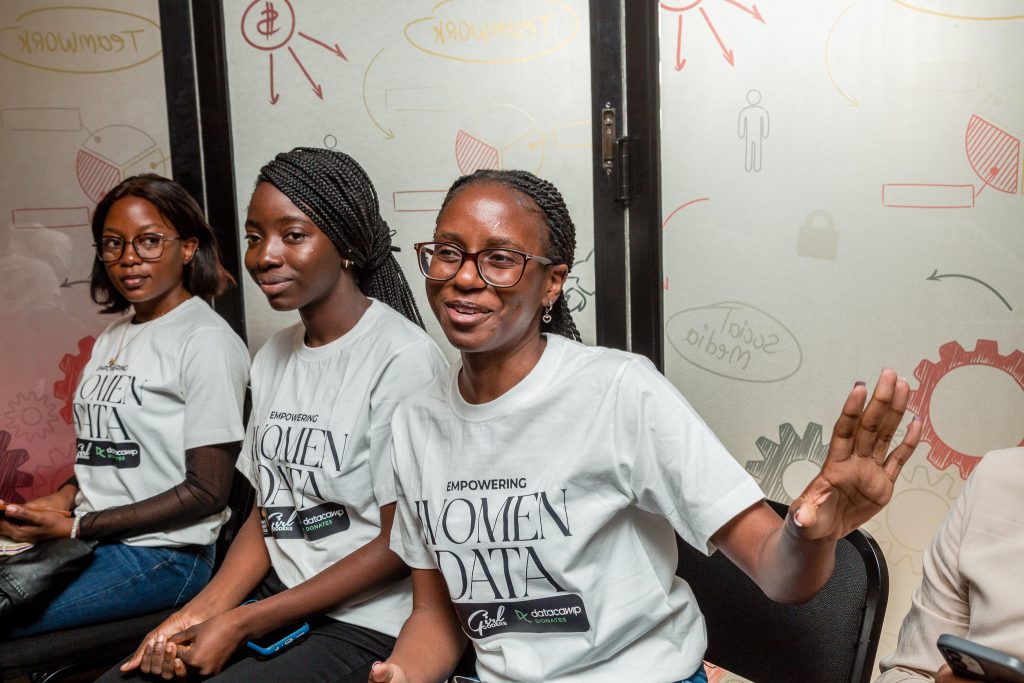
At Tech Impact Club Africa (TIC Africa), we believe the answer starts with people. Specifically, with equipping young Africans, and especially young women, with the practical data and AI skills to build solutions for their own communities. One of the clearest examples of this in action is a program we’re proud to have funded: Empowering Women in Data (EWID), run by Girl Coders Zambia.
Starting With Data Literacy, Not Just Hype
Before organizations or individuals can meaningfully adopt AI, they need a foundation in data: how to collect it, clean it, interpret it, and use it to make decisions. That’s exactly where EWID began.
Over an 8-month journey, the program reached 101 registered participants across Zambia and saw 84 women actively engaged in learning. Participants ranged from secondary school leavers to graduate students and early-career professionals, all working through core modules in Python, R, SQL, data cleaning, and visualization.
This is the unglamorous but essential groundwork of AI adoption: without data literacy at scale, AI remains a tool for the few rather than a capability for the many.
Mentorship: Connecting Learning to Real Industry Practice
Skills alone aren’t enough; people need to see how those skills translate into real careers and real impact. EWID paired participants with mentors from organizations like banks and telcommunications, covering everything from AI strategy and analytics coaching to software engineering and fintech.
Participants also got a firsthand look at AI and data in action through a corporate tour of a bank’s innovation lab, where they saw how a leading financial institution uses AI-driven tools and business intelligence systems in day-to-day operations. It’s one thing to learn a Python module; it’s another to watch a bank’s data and analytics team explain how those same techniques shape real decisions.

Building Local Solutions, Not Just Local Skills
The most compelling evidence that AI adoption is working in Africa isn’t in training completion rates; it’s in what people build with what they’ve learned. In EWID’s capstone phase, participants formed teams to tackle real Zambian challenges using data-driven and predictive approaches, including:
- Optimizing emergency healthcare response and ambulance dispatch
- Reducing food waste in urban supermarkets through forecasting
- Identifying early warning signs of student dropout in higher education
- Predicting traffic congestion to improve urban mobility
These aren’t hypothetical exercises. They reflect exactly the kind of grounded, context-aware problem-solving that makes AI genuinely useful in African settings, rather than a copy-paste of solutions designed for other markets.
Why This Matters Beyond One Program
EWID is one program, in one country, funded through one grant. But it’s a working example of what AI adoption in Africa can look like when it’s built from the ground up:
1. Start with accessible data skills, not advanced AI theory.
2. Pair training with mentorship from people already working in the field.
3. Anchor every project in a real local problem, including healthcare access, food waste, education, mobility.
4. Create visible moments of achievement: hackathons, demo days, industry tours that build confidence and community.
At TIC Africa, this is central to why we fund programs like EWID: not just to teach a skill, but to build a pipeline of confident, capable problem-solvers who see AI as a tool they can shape, not something being done to them.
As we continue to support initiatives across the continent, we’ll be sharing more stories like this one — real programs, real participants, and real progress toward an Africa that isn’t just adopting AI, but actively shaping how it’s used.
Interested in supporting programs like EWID, or learning more about our work? Get in touch with TIC Africa.